
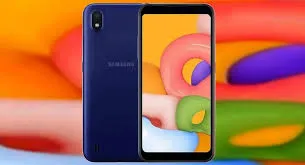
Introduction of samsang galaxy A01 core
The Samsung Galaxy A01 Core is an entry-level Android smartphone designed for users who need a simple, genuine device for everyday basics. Built with Android Go Edition, a compact 5.3-inch display, and a lightweight design, it focuses on required tasks like calling, messaging, light browsing, and video streaming. This infographic highlights the phone’s key specs, design, and core features, helping statement buyers quickly understand whether the Galaxy A01 Core fits their needs.
Launch & Availability
Why: Launch info clarifies market timing and regional availability, affecting pricing and buying intent.
- (M) Announce / launch date (exact day, region): Released August 2020 (widely listed as August 6, 2020). Use the producer support page or firmware pages as authoritative references for release windows.
- (M) Initial markets / regions: Regions varied global budget markets including parts of Asia, Eurasia, and selected developing markets. Check Samsung support pages for region-specific SKUs.
- (S) Carrier variants & region-locked SKUs: Note any operator-locked versions; for very low-end models these are less common but check local retailers and FCC filings.
- (N) Release cadence / pre-order windows: Usually brief or absent for ultra-budget devices.
Canonical Spec Table Samsung Galaxy A01 Core
| Field | Value |
| Model name | Samsung Galaxy A01 Core (SM-A013F / SM-A013F/DS) . |
| Release / Announced | 2020, August (widely referenced as Aug 6, 2020). |
| Release OS | Android 10 (Go edition) shipping OS on many units. |
| Chipset / SoC | MediaTek MT6739 (4x A53 cores @1.5 GHz). |
| GPU | IMG PowerVR GE8100. |
| RAM / Storage options | 1 GB / 16 GB, sometimes 2 GB / 32 GB variants depending on the market. Expandable microSD slot supported. |
| Display | 5.3″ PLS TFT (or LCD variant), 720 × 1480 px, ~311 ppi, 60 Hz. |
| Main camera | 8 MP, f/2.2 (single rear). |
| Front camera | 5 MP. |
| Video | 1080p@30fps (typical for this SoC). |
| Battery | 3000 mAh, non-removable on most retail versions (some listings historically speculated removable; verify region). |
| Charging | microUSB 2.0 (standard low-watt charging). |
| Ports | microUSB, 3.5mm audio jack. |
| Connectivity | Wi-Fi 802.11 b/g/n, Bluetooth 4.x/5.0 depending on SKU, LTE bands vary by region. |
| Sensors | Accelerometer, proximity. No fingerprint sensor on most SKUs. |
| Dimensions & weight | ~141.7 × 67.5 × 8.6 mm; ~150 g. |
| Materials | Glass front, plastic back & frame (common for this price tier). |

Battery & Charging Tests
Why: Battery life is a primary buying filter. Standardize tests so readers can compare across models.
- (M) Nominal capacity and vendor claim: 3000 mAh nominal.
- (S) Standardized test results to run and publish:
- Video loop test (1080p, 50% brightness) producer until 0%.
- PCMark Work battery test note profile (airplane on/off, Wi-Fi state).
- Real-world usage trace light browsing, messaging, calls, 30 mins YouTube streaming.
- (S) Charging speed tests: Measure 0→50%, 0→80%, and 0→100% with the included charger (or a standard 5–10W charger). Many retail boxes ship with modest chargers; record ambient temperature. For A01 Core, expect slow microUSB charging.
- (N) Battery health / degradation guidance: Note expected charge cycles and tips (avoid deep discharge cycles frequently; keep between 20–80% for longevity).
Testing note (example method): Video loop: 1080p file on loop, brightness fixed at 50%, volume muted, airplane mode enabled, run until shutdown. Repeat three times and average.
Performance & Benchmarks
Why: Benchmarks provide standardized comparison points, but for editorial integrity include raw results, conditions, and device state.
- (S) Recommended tests: Geekbench (single/multi), 3DMark (Sling Shot or equivalent), PCMark Work 3.0 for battery/workload correlation. For A01 Core, expect very low single-core and multi-core numbers congruous with low-end MT6739 SoC and 1–2 GB RAM. Use at least three runs and report averages.
- (S) Thermal / throttling notes: Low-power SoCs often show stable temperatures but weak sustained GPU performance. Note background services, whether the device runs in power-save profile, and whether thermal throttling occurred.
(S) Real-world notes: Document app cold-start times (e.g., Chrome, YouTube), number of apps that can remain in background without reloading, and UI frame drops during animation or scrolling.
Camera Testing & Media
Why: Camera presentation and verifiable samples are essential to buyer confidence.
- (M) Sample photo set: Daylight, indoor (incandescent+LED), low-light, portrait (if the phone supports portrait-like software blur), and macro where applicable. For the A01 Core’s single 8 MP sensor, it is honestly remarkable in low light.
- (M) Full-res downloadable images (ZIP) / gallery link: Provide original JPGs and label filenames consistently: a01core_daylight_01.jpg, a01core_lowlight_01.jpg, etc. Include EXIF where possible.
- (S) RAW files: If the device or camera app exposes RAW (rare on this tier), include them. Most low-end phones don’t.
- (S) Test methodology: For each sample, record scene, focal distance, ISO, shutter (if app permits), and whether AI/enhancement modes were used.
- (S) Captions & Recommended camera settings: Offer recommended modes (HDR on/off), and advise users how to squeeze better results (steady hands, adequate light).
Design & Display Notes
- (M) Form factor & physical notes: List SIM tray type (single/dual + microSD), button layout, and whether the back panel is removable. A01 Core uses a small footprint (5.3″) and a standard rear camera module.
- (S) Measured brightness in nits & color accuracy: If you have a lux meter and colorimeter, publish constant nits (peak, APL) and a dE chart. For this class of device expect modest peak nits (~300 or lower).
- (S) Screen-to-body ratio & bezel notes: Note visible bezel, chin thickness and any screen lamination type. Small phones often trade bezel size for cost.
Practical tip: Use a caliper and digital scale to record thickness and weight; use a lux meter for brightness.
Software & Updates
- (M) Shipping Android version & vendor skin: Android 10 (Go edition), Samsung’s lightweight UI
- (S) Update policy / announced OS updates: Ultra-budget models typically receive limited OS updates. Check Samsung’s official support pages and software build listings to confirm security patch and minor update cadence. Firmware/combination pages show build dates and regions.
- (S) Known OTA/firmware build list & changelogs: Link to official firmware pages when available; list build numbers and dates you’ve validated.
Editorial tip: Put the update policy near the top of the page with a “Last updated” date many buyers search “how many Android updates does X get”.
Pricing & Retail
- (M) MSRP / launch price: At launch this device was station in the ultra-budget bracket (often sub-$100 / region-dependent). Always include currency + date (e.g., “Launch price: €X quoted on [date]”). Use local retailer snapshots for current street pricing.
- (S) Current Street price ranges by region (retailer + date checked): Provide a small table with PKR, USD, EUR and the retailer + date (e.g., “Checked Jan 24, 2026 PKR 13,999 on PriceOye”).
- (S) Affiliate link placeholders: Add fields for affiliate parameters, but don’t auto-insert live affiliate links until policy review.
Pros & cons
Pros
- Very affordable price suitable for tight budgets
- Compact & lightweight easy to use with one hand
- Clean Android (Go Edition) smoother than anticipate on low hardware
- Expandable storage via microSD card
- Decent call quality & signal reception
- Good as a first smartphone (kids, seniors, basic users)
Cons
- Low performance slow app loading and multitasking
- Weak camera quality swedge in low light
- Small battery (3000 mAh) average backup only
- Low-resolution display not sharp for videos or reading
- No fingerprint sensor
- Limited Android updates
- Not suitable for gaming or heavy apps
FAQs
A: The Galaxy A01 Core features a 5.3-inch PLS TFT display, MediaTek MT6739 processor, 3000 mAh battery, Android Go Edition, and a single 8 MP rear camera with a 5 MP front camera making it a basic, budget-friendly smartphone.
A: Yes for basic everyday tasks like calls, texting, social media, light browsing, and video watching. However, it’s not designed for heavy multitasking, demanding games, or advanced photography.
A: Yes it includes a microSD slot that allows you to expand storage beyond the internal capacity, which is useful for photos, videos, and apps.
A: The 3000 mAh battery provides dependable all-day battery life for light to moderate use, especially with the power-efficient Android Go Edition. Heavy gaming or extended video streaming will draw more power.
A: Yes it runs basic versions of popular apps such as WhatsApp, Facebook Lite, Instagram, and YouTube smoothly. Full versions of heavier apps may run slower due to hardware limitations.
Conclusion
The Samsung Galaxy A01 Core is a strictly entry-level smartphone made for users who need the essential only: calls, WhatsApp, light browsing, and Occasional YouTube. It’s not built for performance, photography, or long-term heavy use, but it does distribute a reliable Samsung experience at a very low price.
