
Introduction
Not long after summer began in 2020, two new Samsung Devices arrived with quiet confidence. Instead of chasing trends, these models leaned into doing real work fast. One features a large screen where handwriting feels natural, thanks to precise pen control. Built right in is a desktop-like mode for multitasking without switching gadgets. Their cameras snap crisp shots even when the light fades late in the day. While many phones try to be everything, these focus on helping users finish tasks more quickly. A bold move, considering how few now bet on styluses: yet here it thrives, part of what once set Notes apart. With sharp screens and responsive tools front and center, they speak clearly to those who type more than swipe.
By 2026, things had shifted entirely. Not one person reaches for these devices just because they’re fresh off the line or promise years of updates. Instead, interest comes from those hunting a solid secondhand bargain, needing muscle for daily tasks, or chasing that old-school Note vibe – without paying today’s premium prices.
This moment needs that contrast like never before. Not about who won back then, does it come down to? What holds up when the calendar flips ahead decides it instead.
A clear choice stands out – when prices are close, the Galaxy Note20 Ultra wins. Should the standard version cost much less, and you prefer something slim without curves, then it might fit. By 2026, one fact holds: the Ultra delivers more as a full-featured leader. Using it daily, the top model simply matches what a real Note should feel like.
TL;DR
What stands out about the Samsung Galaxy Note20 Ultra is how its screen pulls ahead, not just in brightness but in smooth responsiveness. Its camera setup handles light and detail with noticeably greater skill compared to most phones, even years later. Instead of feeling limited, the S Pen works here like an extension of your hand, faster and more precise. Build quality adds to that impression – solid materials, careful assembly, nothing creaky or loose. While the standard Note20 manages decent performance, it skips some refinements found above. Over time, that difference becomes harder to ignore. By 2026, people are still tracking down the Ultra, trading it, fixing it up, keeping it alive.
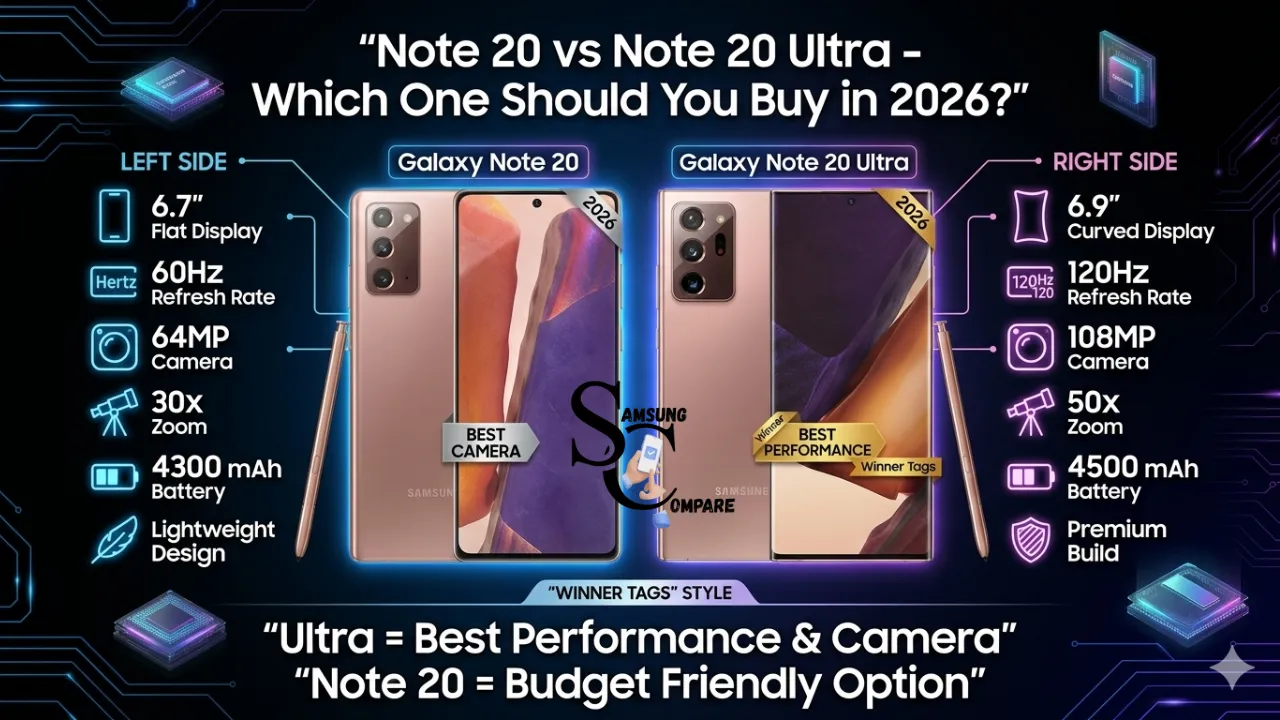
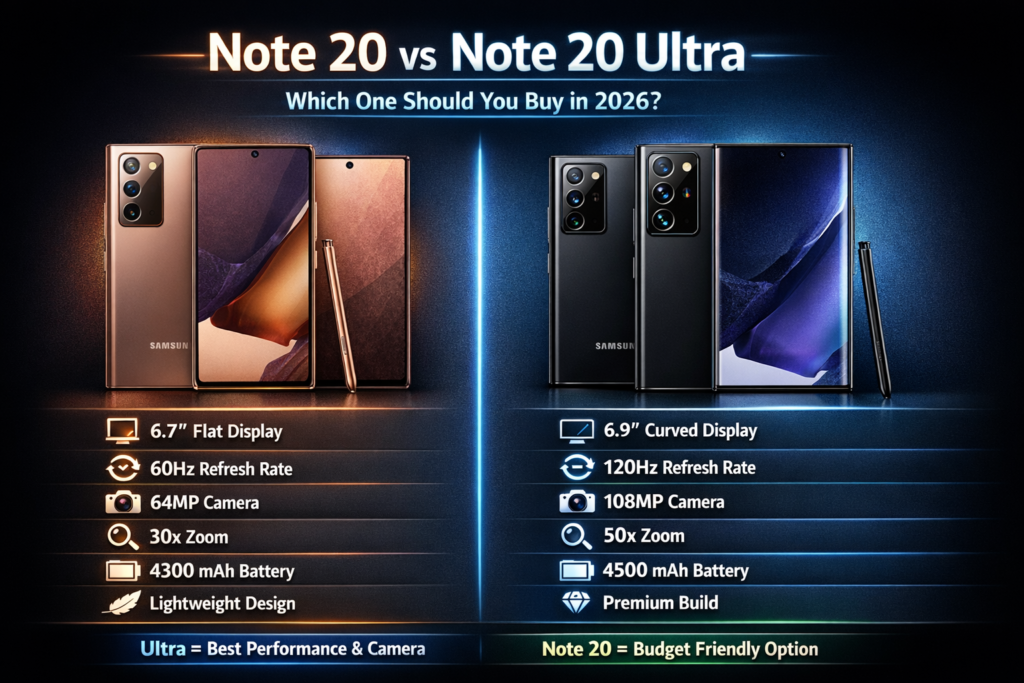
Midway through its lineup, Samsung placed the Ultra as the high-end version of the Note20 series. It arrived carrying a curved 6.9-inch screen alongside a smooth 120Hz update speed. A massive 108-megapixel lens led the photo setup, backed by zoom power stretching 50 times into the distance. Toughened glass protection came built-in, known as Gorilla Glass Victus. Power stayed steady thanks to a 4500 milliamp-hour cell tucked inside. On the flip side, the standard Note20 settled on a flatter 6.7-inch panel without curve effects. Its camera stepped down slightly to 64 megapixels, offering half the reach at 30x zoom. Lighter in hand, it carried less weight during daily carry. Priced lower than its sibling, it aimed toward easier access despite fewer extras.
Quick Comparison Table
| Feature | Galaxy Note20 | Galaxy Note20 Ultra | Why It Matters in 2026 |
| Display | 6.7-inch flat Infinity-O, 192g | 6.9-inch edge Infinity-O, 208g | The Ultra feels more premium and better for reading, drawing, and multitasking. |
| Refresh rate | Standard display experience | 120Hz refresh rate | The Ultra feels smoother and more modern in daily use. |
| Main camera | 64MP | 108MP | The Ultra is better for detail, cropping, and serious photography. |
| Zoom | 30x Space Zoom | 50x Space Zoom | The Ultra gives more reach for travel, events, and distant subjects. |
| Battery | 4300 mAh | 4500 mAh | The Ultra starts with the larger battery, which helps in a used phone. |
| Durability | Standard glass | Gorilla Glass Victus | The Ultra has the tougher front glass, which matters on older devices. |
| S Pen feel | Very good | Better with 120Hz support | The Ultra feels more natural for writing and sketching. |
| Weight | Lighter | Heavier | The regular Note20 is easier to carry all day. |
Overview
Right away, you might think the Note20 and Note20 Ultra are nearly twins. Same design roots tie them together, along with matching tools built for getting things done. Yet once you start comparing, distinctions pop up quicker than most assume. The Ultra carries extra weight in build and capability, showing Samsung’s intent from the start. That gap hasn’t faded – it still shapes how each model feels in daily use.
One phone leans hard on top-Tier Visuals, another spreads power across tasks and fun. Yet the Ultra grabs sharper colors, a crisper screen, and lenses that dig deeper into light. Its energy lasts longer, feels weightier in hand, like something crafted slowly. Meanwhile, the base Note20 moves with lighter steps – screen less dazzling, camera parts chosen carefully but not extravagantly. Design choices here favor reach over rarity. You notice it first in how it sits, then in what it skips. Not worse, just shaped for different hands.
Here’s how it breaks down. Picking one comes down to what matters most right now. Want top performance shaped like a Note? The Ultra stands out without question. Looking for the classic name, built-in stylus, plus something lighter in hand? That’s where the standard Note20 fits better. Yet feeling good to hold doesn’t automatically mean it leads to building or features.
Design and Display
Far beyond subtle now, this group marks a shift you can’t miss.
A 6.7-inch flat screen sits on the front of the Galaxy Note20, this model tipping the scales at 192 grams. Bigger still, the Note20 Ultra packs a 6.9-inch curved display, its frame carrying 208 grams. Lighter weight makes the standard version simpler to grip, slip into a coat, or use without strain when held in one hand. In contrast, the Ultra feels bulkier, bolder, harder to ignore – built like something meant to stand out.
Out on the streets, the Ultra pulls ahead fast – its display just works better. A big part of that? It runs at 120Hz, something Samsung built right into the design. That speed shapes everything, turning taps and swipes into near-effortless moves. Everything flows more easily, as menus breathe between gestures instead of stuttering through them. By 2026, this kind of motion sets apart what feels fresh from what drags behind – even if power numbers look close. How things move now weighs heavier than paper specs ever did.
Writing feels smoother thanks to the sharper screen response. Because of how fast it reacts, drawing or marking up documents seems almost effortless. People jotting down thoughts each day, tweaking files, or leaning on their device for work notice this small edge adds up without fanfare.
Flat glass gives the Note 20 a clean look. For those who find curves fussy, this design works better – typing lands more accurately, games respond cleaner, and touches happen where intended. Curves on the Ultra bring drama, a glossy high-end vibe that shouts premium at first glance. Not every hand loves that swoop, though. Yet when held side by side, something about the Ultra just seems rarer, harder to ignore, almost like it arrived from another time.
Durability now carries greater weight in 2026 compared to when the phone first came out. Not long ago, Samsung fitted the Ultra with Gorilla Glass Victus, built it tougher, and ranked it higher within its glass lineup. Because of this shield, wear matters less; buyers aren’t unwrapping something fresh from storage. Instead, fingers trace over a gadget shaped by time: shoved into coats, tapped against tables, dropped on tile, maybe left outside. Scratches add up, sure, yet the sturdier face holds better under such history.
Design verdict
For those who value top-tier performance in a Note device, the Ultra stands out. The standard Note20 fits better if a sleeker, slimmer phone matters more. Still, on sheer screen quality and build finesse, the Ultra takes the lead.
Performance and Everyday Speed
At first look, raw power doesn’t stand out as a major difference. Built in the same era, each phone aims high – meant for heavy workloads, smooth switching between apps, media flow, daily tools, without stumbling. With 5G on board, Wi-Fi 6 support, plus desktop-style output through Samsung DeX, the Note20 series arrived ready for real tasks. So long as they’re well kept, either one holds up fine for regular office needs today.
Though years count, so does how it sits in your bones. A number tells one part – how you carry it shapes another.
Freshness comes through clearly on the Ultra once more. With its 120Hz screen, every tap and swipe gains smoothness – apps launch without drag, feeds glide past fingers, navigation flows effortlessly. Menus respond with ease, long reads stay comfortable, and document edits move seamlessly forward. Task switching finds rhythm, too. Because of the bigger screen, using two apps at once becomes natural – for example, keeping notes next to web pages or lining up emails beside reports. Space helps it all fit together.
Here is what matters for anyone buying in 2026: flagship phones wear out at different rates. One might still perform well yet seem outdated, simply due to an aging display. That gap shows clearly when comparing models. Instead of fading fast, the Note20 Ultra holds up more reliably than its smaller sibling.
If your days involve lots of screen time, juggling tasks, sketching ideas, or just liking a device that feels solid in hand, then the Ultra holds up better over months. Speed on the Note20? Fine for everyday stuff – yet somehow misses that top-tier vibe when held side by side.
Performance verdict
Even so, the standard Note20 handles everyday tasks just fine.
Battery life on the Note20 Ultra stays strong after months of use.
Faster each time you try it.
Fully drawn into the moment, the Note20 Ultra wraps you in a richer sense of presence. Its design carries weight – not just in hand, but in overall finish.
Camera Comparison
Here’s when the Note20 Ultra clearly pulls ahead.
Out of nowhere, Samsung put a 64-megapixel main lens on the standard Note20, along with 30-times zoom power. Then again, the Note20 Ultra stepped up with a 108-megapixel shooter and doubled down to 50x magnification. Not merely numbers playing dress-up – this shift actually shifts how the device behaves day to day. Especially once you start pulling tight on distant scenes or trimming images after capture. Distance matters less now, thanks to that jump.
Picture quality leans heavily toward the Ultra Across nearly all real-world uses. When snapping on trips, framing people, shooting buildings, catching bright scenes, or making posts, it simply performs better. A 108-megapixel camera means tiny textures show up clearer, while a more capable zoom range helps when stepping back is the only option.
Picture this: by 2026, the difference in zoom power really matters. Older phones might snap okay shots up close, yet fall apart once you try to magnify. Not so much with the Ultra – it keeps pace. Snap a faraway landmark, catch something on stage, frame a bird mid-flight, read a highway marker, even focus on random things across the street – the reach makes it obvious. That stretch in distance? You see it clearly.
Starting, Samsung packed extra tools into its camera system – especially for video lovers who want manual control. Instead of just basic shots, the Note20 lineup lets users run several lenses at once, capture bright scenes with HDR both front and back, shoot ultra-detailed slow motion at 960 frames per second, and record crisp 4K footage. While each model shares these abilities, it’s the Ultra version that stands out as the real photo powerhouse.
Not bad at snapping pics, the Note 20 just falls short next to its bigger brother. Good enough? Sure – when you’re tossing up stories or catching moments on the fly. Daily shots work out okay, too. Yet if sharp photos matter most to you, picking the Ultra makes total sense instead.
Camera verdict
The top pick? That one stands out. It just fits right.
Focusing on pictures, sharpness, or reach? The Note20 Ultra fits that need. Starting with clarity, moving through range – this model handles it all. When close-ups matter, or distant subjects come into play, this phone answers. Details stay crisp, even when pulling far away. For those who watch pixels closely, this device makes sense.
Photos come through sharp on the Note20 Ultra. Zoom works strongly, pulling distant things close without losing much detail.
S Pen Experience
What draws most folks to a Note device? The S Pen. These two versions hold to that idea. A quicker response comes from the stylus now, thanks to tweaks by Samsung. Writing feels sharper, somehow more exact. Gestures without touching the screen appear to be new tricks for moving through tasks. Each model keeps what matters, yet steps forward just enough.
Yet it’s the Ultra that best justifies keeping the Note name alive.
Picture this. A bigger screen means extra space – use it to jot notes, mark up files, draw quick concepts, or sort through your daily duties. What stands out is how the 120Hz display sharpens every pen stroke, cutting lag so movements flow more smoothly. If the S Pen is part of your routine, these details quietly make a difference.
With the Ultra’s S Pen, Samsung pointed out a quicker reaction time. Closer to real handwriting happens because of that snap in response – something long-time Note users look for. Hard to notice at first if you’re just trying it out for a minute. Yet after days pass, it’s one of those quiet details making the Ultra seem like the true successor.
Even without the top model, you get the stylus and its everyday perks. Jotting down ideas, editing documents, and quick access tools – all stay part of the deal. Yet the bigger one pulls ahead when it comes to how good it feels in your hands.
S Pen verdict
One phone handles note-taking just fine. The other works well too, depending on how you type. The Note 20 Ultra is better. A screen that runs at 120Hz keeps motion smooth. Motion clarity gets better because of how fast it updates.
Fingers glide more easily across the screen when working with the S Pen. That kind of flow feels less forced, more like handwriting should. Movements follow thought without dragging behind. What results is a rhythm close to pen on paper. The lag dips so low it stops mattering. The Note20 Ultra display gives you space to write. Much smoother to jot things down using the S Pen, thanks to how the Note20 Ultra handles it.
Battery and Charging
Fueled by a 4300 mAh cell, the Note20 pairs its juice with rapid top-up speed. Meanwhile, the bigger Ultra model runs on 4500 mAh power. Either one hits full charge close to sixty minutes when using Samsung’s supplied brick. Speedy refill at 25 watts defines both, given just the right setup.
Battery wear matters most in 2026. On paper, they seem okay.
The phone’s starting power matters most now, since age chips away at every model from 2020. A chunkier juice reserve helps when time has taken its share. Size tilts the balance toward the Ultra here. With more stored up front, dips feel less sharp later on. Big display? Sure, but it shares space with a heftier pack inside.
A year-old top-tier model might seem fine at first glance. Yet once the power Cell Degrades, what worked all day now needs constant plugging in. Starting stronger helps here. That extra edge means less worry when days stretch long. For anyone who hates hunting outlets, this one sticks around longer.
Even the standard Note 20 holds charge fine at first glance. Yet with less room to spare, wear shows faster over time. This isn’t about breaking down. Just that the Ultra handles years better. A quieter strength.
Battery verdict
The reason folks lean toward the Ultra? It runs on a beefy battery, which pairs well with daily routines come 2026. What stands out isn’t just power but how everything fits together – smooth, practical, ready. Year after year, its mix of stamina and performance keeps it near the top, especially when regular use matters most.
Software and Updates in 2026
Fair warning – dreams must fit real life here. Expectations ought to match what’s actually possible, nothing more.
By 2020, the Galaxy Note20 series had already hit markets – Samsung’s approach to updates shifted after that point. Later on, fresh Galaxy models began receiving longer support, though these improved terms didn’t stretch back. Devices like the Note20 came before that shift; they’re part of an earlier wave. Come 2026, expect it to run like hardware past its prime, not a pick for future-ready performance.
Here’s what really matters when picking a phone. Pick one not because it promises endless upgrades. Choose based on how solid the build feels, how fast it runs today. Updates fade – what stays is the screen, the camera, the weight in your hand. Future-proofing is a myth sold with every new model. What counts now will still count next year. Ignore the promise of tomorrow’s patches. Look at what works right in front of you.
Buying secondhand or renewed? Value matters most – how much you pay versus what you get. A solid device at a fair cost stays appealing. Yet chasing future updates isn’t wise here. Support fades faster than savings grow.
For those running businesses, watching security closely, or holding onto devices long-term, timing matters more now. By 2026, the Note20 lineup won’t stay up to date.
Software verdict
Avoid either handset if you need updates past 2025. Though both may work now, their future is shaky by then.
This phone’s worth ties to its physical parts, not its lifespan. What matters here is what it’s made of, instead of how many years it runs. Build quality stands separate from durability. Components define the cost, rather than the time spent working. The materials inside set the price, even if they wear out fast. The hardware worth of the phone is under review
A choice rooted in physical components shapes it, rather than predictions on lifespan. Still, durability isn’t the core concern here.
Real-World Use: Which Phone Fits Best
The best way to choose between the two is to think about the kind of user you are.
Buy the Galaxy Note20 Ultra if you are:
That person looking for the most complete Note performance today will find it here. You get a spacious 6.9-inch screen with smooth 120Hz motion, paired with a sharp 108MP lens system capable of 50x magnification. Built to feel more refined in hand, its body houses a longer-lasting power cell. On top of that, the S Pen responds with greater precision. By 2026, these details together will keep it ahead.
When jotting down ideas or flipping through documents, the Ultra fits right in. Its larger display shows travel pictures with clearer detail. Tasks like editing slides or handling several apps at once move faster. Creative projects gain extra room to breathe on the screen. A fluid touch response helps everything feel less clunky. For these uses, it simply works better.
Buy the Galaxy Note20 if you are:
A person liking something slim, light, one that fits well in the hand, might skip top-tier cameras or ultra-smooth screens. That’s where the Note20 stands out. It holds up, particularly when all you’re after is the name, the feel of the S Pen, minus the higher cost of the Ultra version.
Only when the cost gap feels wide does the standard Note20 truly fit. A sensible pick, yet it falls short of a top-tier feel
Pros and Cons
Samsung Galaxy Note20 Ultra — Pros
- Bigger 6.9-inch display
- 120Hz refresh rate
- 108MP camera
- 50x Space Zoom
- Gorilla Glass Victus
- Larger 4500 mAh battery
- Better S Pen feel
- More premium overall design
Note20 Ultra — Cons
- Heavier than the regular Note 20
- Usually costs more on the used market
- Curved edges may not suit everyone
- Older battery wear can still be a concern
Galaxy Note20 — Pros
- Lighter and easier to carry
- Flat display is practical
- Good for users who want a more manageable Note phone
- Can be a budget-friendly way to get S Pen support
Galaxy Note20 — Cons
- No 120Hz refresh rate
- Weaker camera hardware
- More obvious compromise model
- Less premium than the Ultra
Best Buy Advice for 2026
A single clear way to buy: follow this basic guideline.
Pick the Ultra if it costs just slightly more than the Galaxy Note 20. What you gain shows up right away in daily use – sharper screen, smoother Stylus Control, improved photo quality, longer power life, plus solid materials that feel great in hand. Small price jump brings noticeable upgrades without surprise gaps. The real difference lies in how each part works together when you’re using it.
Should the standard Note20 cost significantly less, come in great shape, plus feel lighter with a flat screen design you prefer – then yes, it remains a sensible pick on a tight budget. Still, see it for what it is: the affordable alternative, never the perfect fit.
A 2020 flagship’s performance depends heavily on its current state, not just what it promised at launch. Before settling on any secondhand or renewed model, take time to test how well the battery holds a charge – older units often degrade here. Screen issues like faint ghost images after prolonged static display might show up under bright light. The port where you plug in the charger could be loose or full of lint, interfering with connections. Try snapping photos at different distances; blurry results may point to lens errors. If it has an S Pen, see if delays happen when tapping or drawing. Play audio through both earpieces and rear speakers to catch muffled or uneven sound. Hidden fixes underneath, especially from unofficial repair shops, can cause problems later down the line.
FAQs
Yes. The Ultra has the better display, camera, battery, and overall build quality, so it is the better phone in most situations.
Only if it is very cheap and in excellent condition, it is still usable, but it is a clear compromise model and should not be bought for a long-term software future.
The Note20 Ultra. Samsung gives it a 108MP main camera and 50x Space Zoom, while the Note20 has a 64MP camera and 30x zoom.
The Note20 Ultra. Samsung’s 120Hz display and larger canvas make the writing experience more precise and fluid.
The regular Note20. It is lighter at 192 grams and has a flat display, which makes it easier to handle.
Final Verdict
The top spot goes to the Samsung Galaxy Note20 Ultra without question.
Display shines brighter, cameras snap quicker, power lasts longer, body feels Sturdier, plus the S Pen glides more smoothly here. Though the standard Galaxy Note20 works fine and may pull interest from certain buyers, it comes across as a lighter take on the top model. By 2026, suggesting it gets tough – unless the cost drops way down.
For those wanting everything the Note20 line offers, pick the Ultra. Those focused on saving money might prefer the standard Note 20’s smaller size. Still, when it comes down to value over time, most people will find the Ultra lasts longer, feels better, and adapts more easily to what comes next.
