
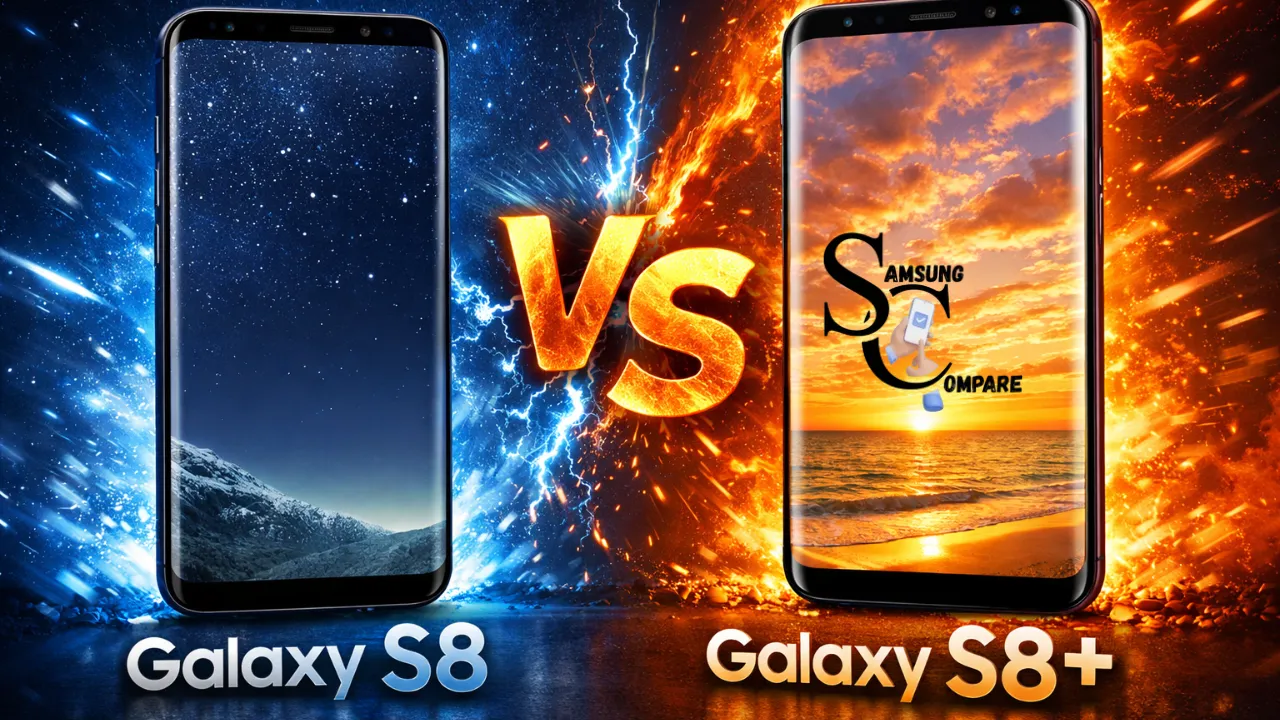
Overview: Which One Should You Buy in 2026?
Even now, people keep comparing the Samsung Galaxy S8 and S8+ – they show up often on resale sites, drawing interest from those after high-end looks without spending much. Back when it was released in 2017, one came with a 5.8-inch screen packed with sharp detail; its larger sibling stretched things out to 6.2 inches using identical display tech. Identical under the surface, their cameras stood, both packing 4GB of memory alongside 64GB of base storage, expandable through microSD cards if needed. A modern port arrived via USB-C, helping them stay connected longer than expected. Built tough against dust and water, thanks to an IP68 rating, they handled spills just fine. Productivity got a boost, too – DeX allowed desktop-style work whenever hooked up properly. Power flowed wirelessly since charging pads worked smoothly with either model. Mobile payments stayed covered as well, combining NFC with older MST compatibility for wider access. Unlocking required a touch of the finger or even a glance at the front sensor built into each phone.
By 2026, everything shifts. Once top models, these phones now belong to the past. Hardware limits often block old devices from getting new Android versions, according to Samsung’s own rules. Reports confirm the Galaxy S8 line stopped at Android 9 Pie, losing regular security updates by 2021. So the real issue isn’t picking a winner. Instead, ask if either device fits what you actually need today.
Start here if size matters most – go for the Galaxy S8 when compact fit in hand ranks high. Pick the Galaxy S8+ as the screen space should top your list. When the cost difference shrinks, the S8+ often makes more sense by 2026. That added 500 mAh power and a wider view softens daily wear on aging hardware. Finish there.
Quick Verdict
Pocket space? The Galaxy S8 fits right in. Lighter build, less width – makes single-hand use actually work without stretching thumbs too far. Back when it launched, Samsung said 155 grams, height just under 149 mm, and width around 68 mm. Even now, six years on, those numbers help it stand out. Size still counts when everything else keeps growing.
One step beyond comes the Galaxy S8+, built for lasting power and rich media moments. Its energy cell stretches to 3500 mAh – clearly ahead of the smaller model’s 3000. A screen measuring 6.2 inches opens up space, turning pages, videos, and side-by-side tasks into something roomier. When Samsung laid out the numbers, they showed clear gaps in both size and juice. Even secondhand, where real wear kicks in, those added reserves mean more than paper claims ever do.
Best overall pick in 2026: Eight years down the line, how well it has been treated matters more than the label on the rear. A Galaxy S8+ might still hold up – assuming the power cell isn’t worn out, the display stays clean, and the cost makes sense. These days, Samsung’s official refurbished lineup treats age like this: thorough checks come first, near-perfect shape is expected, then backed with twelve months of coverage.
What’s the Same Between the Galaxy S8 and Galaxy S8+?
One thing plenty of shoppers overlook comes down to size alone. Not much separates the S8 from the S8+ when it comes to speed, photo quality, or high-end extras. Built from identical DNA, they share a core identity shaped by Samsung’s top-tier vision. The same look defines each model, even though one fits smaller hands better. Identical thinking guided the cameras inside both. That edge-to-edge screen idea? Lived fully in each version – just stretched across two frames.
Huge chunks of what these phones offer turn out identical. A 12-megapixel back camera built with dual pixels shows up on both, paired with f/1.7 lenses and optical image stabilization. Up front, each carries an 8-megapixel selfie shooter. Memory stands at 4 gigabytes across the board. Storage lands at 64 gigabytes but opens up for extra space using microSD cards. Plug into either one through USB Type-C ports. Charging happens quickly, whether plugged in or set on a pad. Samsung Pay works just fine here. DeX mode brings desktop-style control when needed. Touchless signals pass via NFC, while older magnetic stripe systems get covered thanks to MST tech. Dust and water protection meet IP68 ratings straight from day one. Unlocking choices go beyond passwords – fingerprint sensors sit beside eye-scanning tricks.
The actual gap isn’t found in sharper photos or quicker response times. Instead, comfort matters most – how long the power lasts, how big the display feels. Once you ignore old memories and logos slapped on the back, both models offer nearly identical foundations. One just spreads that feeling wider across your hands.
Full Specs Comparison
Take a close look at what shifts how people interact day to day – start there. Hardware differences show up fast when you compare sizes and screens. Samsung says the S8 has a 5.8-inch screen, Quad HD+, running at 2960 × 1440, packing 570 pixels per inch. Bigger Sibling? That’s the S8+, stepping up to 6.2 inches but keeping resolution identical, though density dips to 529 ppi. Weight checks in at 155 grams for the smaller model; its counterpart tips the scale at 173. Power comes from a 3000 mAh cell inside the S8, whereas the S8+ runs on 3500 mAh. Beyond those points, most of what counts during regular use stays nearly identical across both.
One thing stands out right away. Smaller frame, same power – S8 fits snug. Stretch that screen out, you get the S8+, wider view, more space to move. Same pixels packed inside both, yet squeezed tighter into the little one. On paper, numbers favor the compact. But hold them side by side, and extra room to see, swipe, and scroll often wins. Sharpness fades beside stretch when actually using it.
Design and One-Handed Use
One thing stands out about the Galaxy S8 – it holds up as a sleek full-sized phone in a tiny frame. Light at just 155 grams, it slips easily into tight spaces. Its size makes tapping the screen with one thumb far more practical than larger models. Buyers looking for secondhand items these days often skip the oversized ones. A tighter build means less strain on fingers, an easier grip, and a better fit in snug pockets. Even now, that narrow shape answers a need others overlook.
Elegance remains, yet the Galaxy S8+ now carries noticeable heft. With its 6.2-inch screen, 173-gram mass, and broader build, it leans toward being a visual powerhouse rather than something sleek for your jeans. Instead of tight portability, there’s roomier display space plus easier finger navigation across apps. Here’s how it breaks down – agility lives in the smaller model, whereas stretch-out ease settles firmly in the larger one.
Holding the phone one-handed all day? The S8 fits better in that life. Watching videos or reading articles for hours? That is when the S8+ earns its space. Older phones taught us something – ease beats flashiness once the novelty fades. You pick a function now, not what looks good on a shelf.
Display: Small vs Big Experience
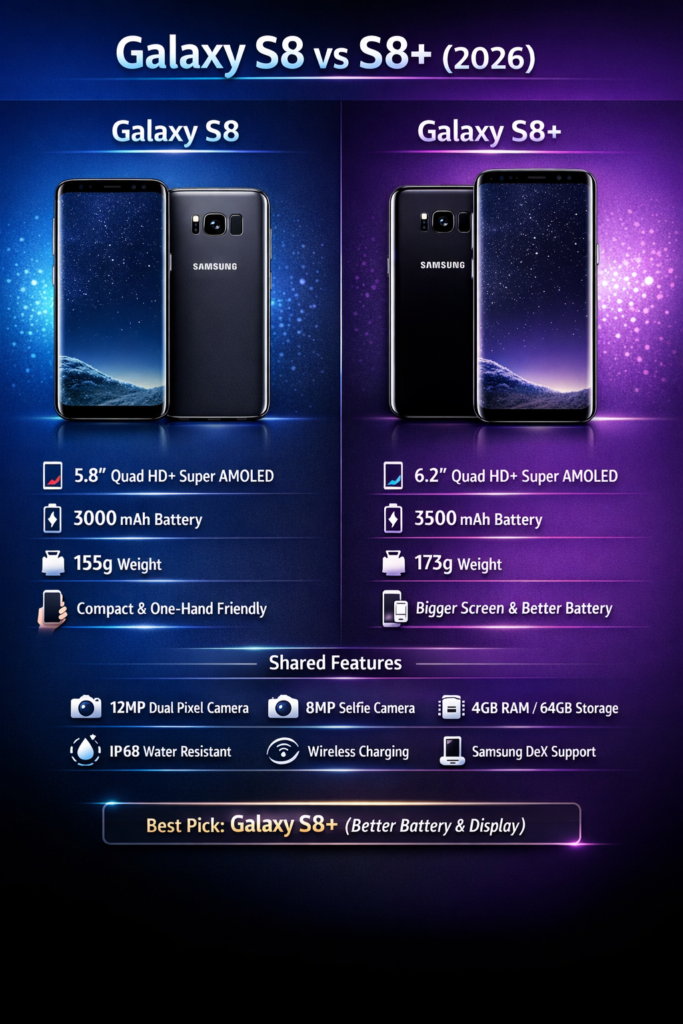
One thing made the S8 series stand out – Samsung’s Infinity Display idea. Bright screens, crisp details, these Super AMOLED panels deliver Quad HD+ clarity. Even today, compared to past high-end phones, they hold up well. Size-wise, the company rated the S8 at 5.8 inches. The larger model, known as the S8+, measures 6.2 inches across. Resolution stays identical: 2960 × 1440 on each device.
One thing stands out right away – the compact S8 packs more pixels into its display, at least on spec sheets. Yet somehow, holding the bigger S8+ makes everything seem wider, deeper, almost like stepping inside the screen. Scrolling through short videos, tapping between clips on YouTube or TikTok, that stretched canvas changes how it sits in your hands. Movies on Netflix? They breathe easier there, too. Now take reading long articles or flicking across web pages – here, the smaller device wins by shrinking the distance your fingers travel. Less stretch means fewer adjustments, a quieter rhythm.
Which screen wins? It hinges on what you want. For tight spaces, pick the S8. If movies matter most, go S8+. When searching online, people do not type “pixel count” – they care how it feels. Sharpness is fine on both, yet the bigger display simply feels better each day for many users.
Performance in 2026
Reality hits hard when you expect too much. Back in 2017, the Galaxy S8 and S8+ stood tall as high-end picks, yet time has taken its toll – now these phones struggle with today’s heavy tasks. Software updates from Samsung come with fine print: aging hardware often misses out on new Android versions. That gap doesn’t just slow things down – it also blocks some apps while leaving holes in protection.
One thing, though – making calls, sending messages, checking email works just fine on either phone. Even using WhatsApp or listening to tunes online holds up when everything’s running smoothly. Browsing the web? Sure, that still goes without a hitch most times. Scrolling through social feeds lightly won’t drag things down too much either. Watching videos on YouTube tends to go smoothly as long as nothing else piles on top. What trips them up lately involves juggling many tasks at once. Big new apps tend to push their limits further than before. Future software updates might not come around often anymore. Running intense games or doing photo edits feels sluggish now. The same chip inside each one means neither pulls ahead in speed tests.
A fresh look at 2026 shows something clear – how tired the battery feels weighs heavier than the small power gap between the S8 and S8+. A used S8+ that’s been treated right might run better just by holding its charge longer, avoiding sluggishness tied to old cells or weak juice. What matters most isn’t what was printed on the box but how the phone has lived since then.
Camera Comparison: Same Hardware, Same Results
When it comes to cameras, these phones look almost the same. Both came out with a 12-megapixel rear lens using Dual Pixel tech, plus an f/1.7 opening and optical image stabilization, fronted by an 8-megapixel selfie cam. According to Samsung’s site, they handled dim lighting well, along with sharper self-portraits, back when they were new. So under regular conditions, pictures from the S8 and S8+ turn out practically indistinguishable.
Daylight shots turn out just fine, while indoor ones manage to get by – though only if expectations stay grounded. Night pictures? Forget anything close to what today’s cheaper phones deliver. Fancy processing tricks aren’t part of the deal either, not anymore. Instead, how well it works now depends less on specs and more on how worn the device has become. Scratches, aging parts, power levels – those quietly shape results behind the scenes.
A true camera champion doesn’t exist when comparing these two. Should someone insist the S8+ shoots clearer images than the S8, it’s likely spin, not specs, doing the talking. Identical sensor setups sit inside both. What actually sets them apart? Screen real estate. Power pack volume. Image sharpness stays level.
Battery Life: The Biggest Real Difference
Here’s when the S8+ pulls ahead for many users. While Samsung gave the Galaxy S8 a 3000 mAh power cell, its bigger sibling got 3500 mAh. That added half a thousand milliamp hours might seem minor at first glance. Yet once you’re out living your day – particularly if your battery has seen better months – it shifts everything: tension fades into manageability.
Aging batteries shift how phones behave over time. When noon approaches, an older S8 might already beg for wall juice, yet a well-kept S8+ keeps ticking past dinner. Size helps – the roomier frame gives its battery breathing space during heavy tasks. Because of this, secondhand shoppers lean toward the S8+, especially if it costs barely more.
Here’s the thing: when prices are close, and battery health looks about the same, go for the S8+. When the smaller one costs much less but holds a charge well, it might be worth considering. Still, by 2026, picking the bigger phone mostly comes down to how long the power lasts.
Software and Updates in 2026
Here’s a fact few pause to consider: software backing shapes everything discussed. Samsung spells it out – updates come in two forms, system upgrades plus patches for safety holes. Older gadgets might miss new Android versions, simply due to what’s under the hood. By 2026, this truth lands hard on the Galaxy S8 line.
One day after another, updates slowed until they stopped altogether. By May 2021, news spread through tech circles that Samsung had ended active backing for the S8 and S8+. Earlier that year, records showed patch deliveries in January and again in April – those became known as the last ones. Though both models once climbed into Android 9 Pie ahead of schedule, progress halted before expected. Now outside the main software plan, they sit untouched by new system rollouts.
Come 2026, anyone buying one knows what they’re getting into. Not meant for heavy tasks like online banking or storing private files over time. Running old software means weak protection against threats now. Still works fine if you just need something basic for a while. Best kept as a spare phone, short-term fix, or when every dollar counts. A fading system under the surface limits how far it can go.
What to Check Before You Buy
A closer look at the battery makes sense before choosing one of these phones. When a gadget has been around this long, poor performance can turn a helpful tool into a source of frustration. Check Samsung’s official refurbished listings – they reveal what level of care goes into assessing devices, giving secondhand shoppers insight: signs of aging play a real role.
Start by checking the AMOLED display carefully. Older OLED screens often show burn-in, though some develop a greenish hue instead. Pixel issues might pop up – dead ones stay dark, while others glow too much. Flickering can happen, especially after long-term use. These phones, like the S8 and its larger sibling, rely on vibrant AMOLEDs that fade subtly over time. Signs of wear usually appear here before anywhere else. Even if the price seems fair, hidden screen flaws make it less valuable. A flawless display adds real worth, far beyond what a lower cost suggests.
Check the USB-C port, then see how the buttons respond, along with whether charging works right. Because Samsung built these phones to handle both quick cable charging and wireless power, when charging acts up, it hits a Central Promise hard. Look closely at the edges and back glass too – cracks or uneven seams suggest clumsy fixes. With older models, dents on the outside usually mean problems hiding inside.
Truth is, pricing has to hurt a little. Take any recent low-cost handset – chances are it runs cleaner software, holds charge better, lasts longer without worry. Look at what Samsung pushes in their refurbished ads: checks, guarantees, proof that today’s buyers care deeply about wear and tear. Skip a sharp discount, and suddenly those old S8s feel hard to justify.
Pros and Cons
Even today, the Galaxy S8 holds up in key ways. Compact size makes it sit well in your palm, plus it weighs little, which helps when using just one hand – something most new models struggle with. A crisp screen catches the eye right away, while the build gives off a high-end vibe without trying too hard. Camera performance matches the larger S8+, delivering similar results in everyday shots. On the flip side, the 3000 mAh battery doesn’t last quite as long, particularly after wear over time tightens its limits.
The bigger of the two, the Galaxy S8+, handles daily tasks with more ease. A roomier display pairs with longer power life, creating smoother viewing for videos or reading – this tilt often wins its favor among people choosing in 2026. Naturally, size brings weight, a broader frame, and a grip that doesn’t always fit neatly in one palm, unlike its smaller sibling. Yet since both share nearly identical insides and photo quality, many overlook these shifts without regret.
Which One Should You Buy?
When size matters most, go for the Galaxy S8. Smaller hands find it simpler to hold, thanks to its lightweight frame and tight dimensions. Operating with just one hand works smoothly here. Even today, it holds up as a solid high-end device. As long as the screen shows clearly and the power lasts, daily tasks run without issue.
The bigger screen makes scrolling through articles feel smoother on the Galaxy S8+. When videos play, they fill more space without shrinking down. Long browsing stretches go more easily because the display stays clear at any angle. Reading under bright light works well since glare hardly builds up. The battery holds out when used all day without needing a mid-afternoon plug-in. For those who hate running low by evening, this one keeps pace. Older phones rarely balance so many needs this quietly. The compact version can’t stretch as far between charges.
Here’s the bottom line – when prices are close, go for the Galaxy S8+. Should the S8 cost much less and look sharper, that compact version might just surprise you. Yet by 2026, most people will find life easier with the larger model in hand.
FAQs
Yes, but only as a very cheap secondary phone, backup phone, or temporary device. Samsung’s update guidance and the device’s end-of-support status mean it is no longer a strong primary phone choice for long-term daily use.
Yes, for battery life and screen size. No, for one-hand comfort. The S8+ gives you the bigger panel and the larger battery, while the S8 remains the easier phone to hold.
Yes. Both use a 12MP Dual Pixel rear camera and an 8MP front camera, and their real-world camera output is very similar.
The Galaxy S8+. Samsung launched it with a 3500 mAh battery, compared with 3000 mAh on the S8. That difference is even more important now that these devices are older and battery wear is common.
Basic apps, yes. Heavy apps and some future updates may become harder to support because the phones are old and no longer receive current Samsung software support.
Final Buying Advice
Picture this – picking between the Samsung Galaxy S8 and the S8+ in 2026 isn’t a puzzle. One slips into pockets like it was made for them: that’s the S8. Then there’s its sibling, the S8+, which stretches wider, lasts longer, and Feels Steady during long scrolls. Most people will lean toward the larger one, though here’s the catch – it must be priced right. The battery should still hold a charge well. The screen ought to shine without flaws. The charging port needs to work every time. When those pieces line up, the plus version makes sense.
